
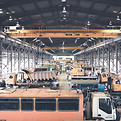
High energy usage
Green construction materials are usually recycled and fabricated with the same or a mixture of substances. The process takes up a lot of energy to reproduce and this is literally against energy saving and CO2 reduction.
The built environment generates nearly 50% of annual global CO2 emissions. Of those total emissions, building operations are responsible for 27% annually, while building materials and construction are responsible for an additional 20% annually.
Yes. Although green construction operation process and materials simplifies on-site processing and reduce on-site CO2 emission, the process of making prefabricated modules and materials counts.
Green construction materials are usually recycled and fabricated with the same or a mixture of substances. The process takes up a lot of energy to reproduce and this is literally against energy saving and CO2 reduction.
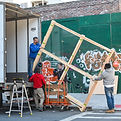
Fabricated materials and modules usually require large transportation which reflects high transportation cost thus larger amount of CO2 reduction.

Recycled products usually are with less reliability and durability, especially plastic and wood. The recycling process can also cause toxic emissions which are harmful to humans and the environment.
Organic and purpose of utilising should be CO2 reduction based
Read More >Focus lean and green processing during production of green materials
Read More >Focus into the integration with traditional building materials rather than replacement of which
Read More >The materials are potentially become the carbon negative alternatives amongst the green construction materials nowadays
Read More >Our team of experienced insect farming specialists, engineers and carbon auditor focus our development into 3 different categories
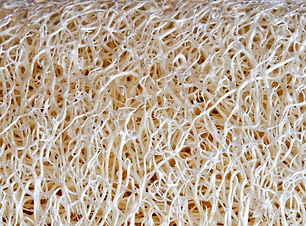
Evaluation of various food waste and the extraction methodologies to estimate the feasibility of necessary fibre contents
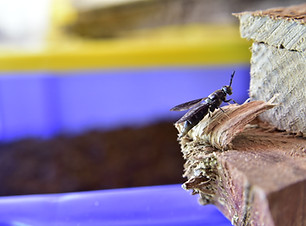
Insect farming in order to formulate the BSF ecosystem by our insect farming specialists to ensure the target food waste are fed and consumed by BSF to pupal stage as to provide necessary contents
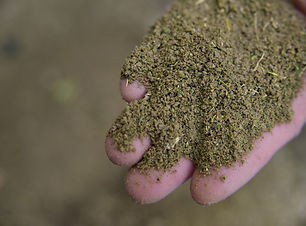
Our science engineers will be responsible for locking down the precise contents and ratio, which is capable for the next step of testing and sampling
 Target
of the traditional building
materials can be replaced by
'waste2build'
of global CO2 equivalent per
year can be reduced
decrease in global temperature
in 15 years
The magical formula to transform insect and vegetable waste
into green construction materials
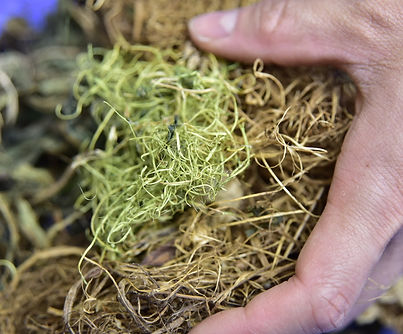
Natural processing via BSF larvae
Selected vegetable fibre are extracted after black soldier fly larvae consume and left behind
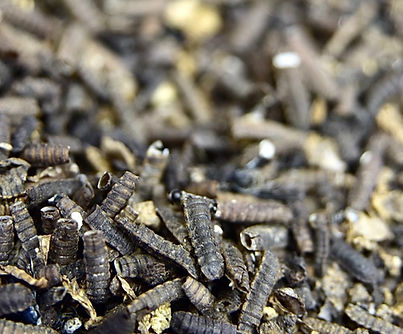
When larvae become adults
Also named as BSF pupal shells, this insect-based ingredients are capable to enhance the hardness and reduce Formaldehyde
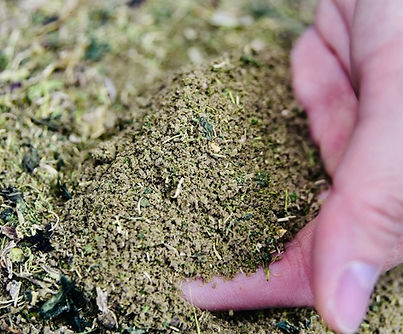
Blend, sterilise, dry
Along with appropriate additional ingredients, via simple and organic processing, Waste2Build is then generated